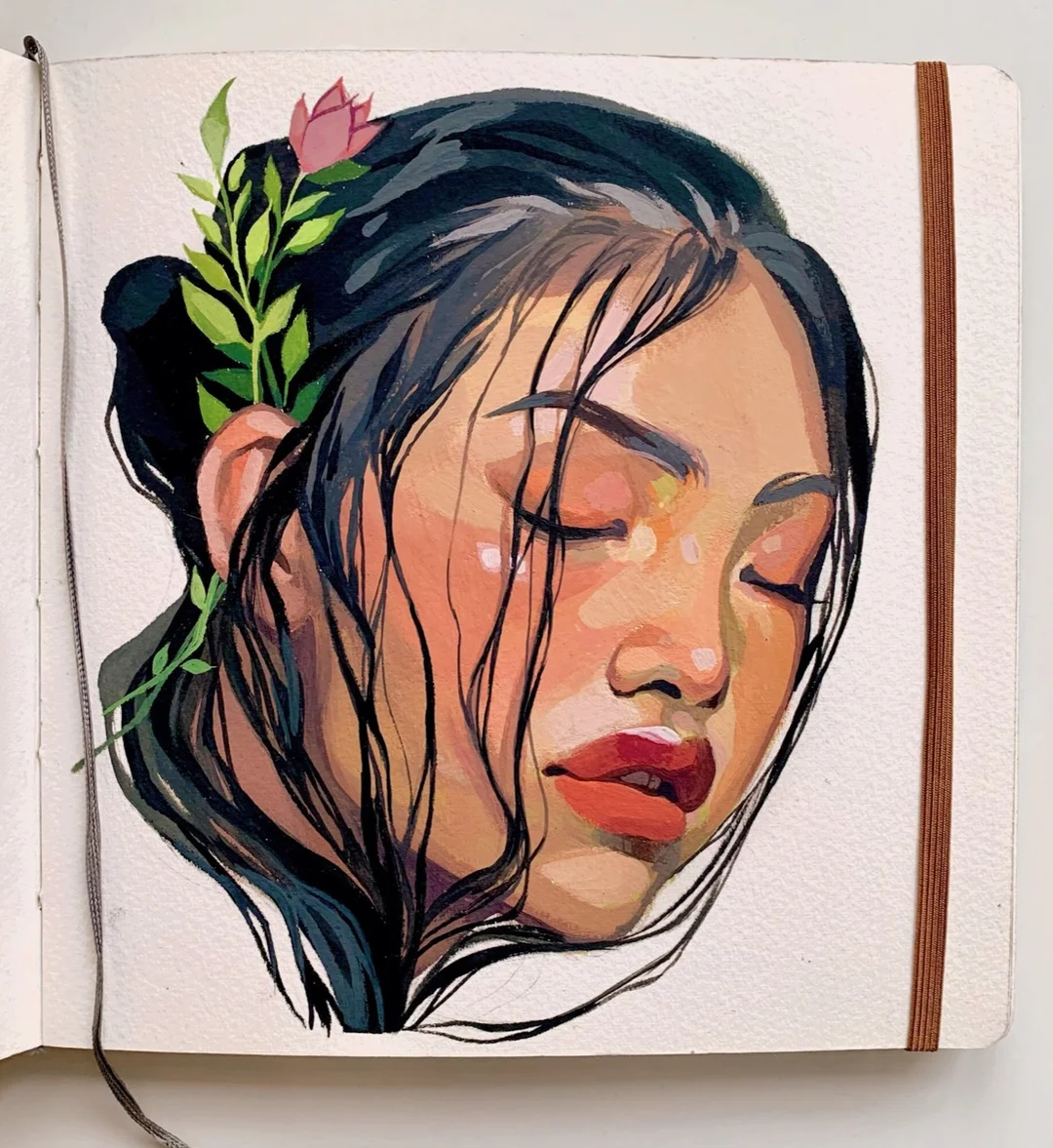
A note before we begin
Not more perfect.
More you.
The purpose of this guide is to make you beautiful. Not by making you more perfect. But by helping you become you — to the full.
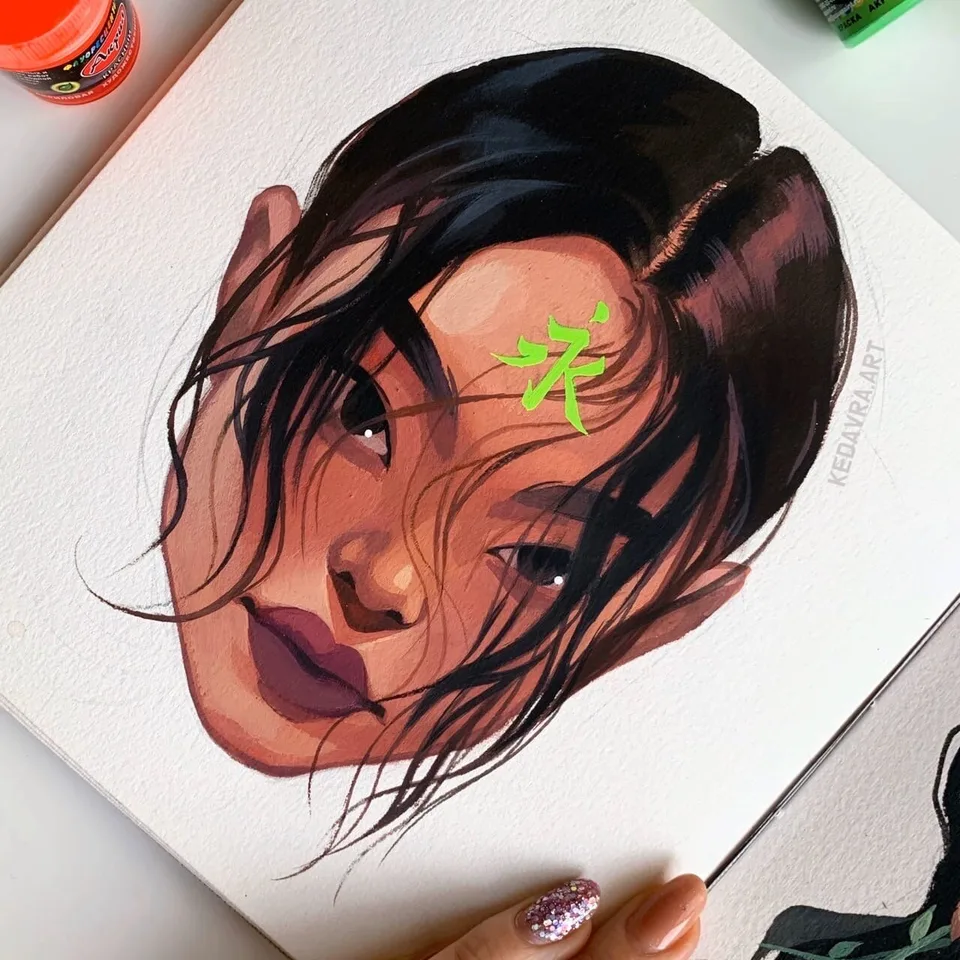
I’m Alena Kedavra, and I’ve been drawing for more than 12 years. I work with gouache and digital art, but this guide isn’t really about gouache, digital art, or even drawing technique.
It’s about what happens when you start taking your own creative life seriously.
I want to show you that being an artist doesn’t have to mean living in constant uncertainty — wondering whether your work is good enough, waiting for inspiration, endlessly fixing your technique, comparing yourself to people who seem to be ahead of you.
I’ve never wanted art to feel like a fight.
For me, an artist is someone who pushes the boundaries of their own world first. Someone who notices what they are drawn to. What they keep coming back to. What makes them curious. What feels beautiful, strange, uncomfortable, exciting.
Someone who can take something they saw somewhere else and turn it into something that could only have come from them.
That’s why I don’t think the most interesting artist is necessarily the one with the best technique. Sometimes I see a technically imperfect drawing and still think: I want to see more of what this person does. Because there is a person behind it. There is taste. There is a point of view. There is something they are trying to say.
And that matters to me much more than making another technically perfect picture that could have been made by anyone.
I also believe that you don’t need to sit around waiting for inspiration to arrive. Pinterest is not going to build your artistic world for you. You have to go looking.
Draw things you’ve never drawn before. Try something that might look stupid. Combine what you see with what you imagine. Follow the weird little things you’re attracted to. Make things that nobody asked you to make.
That’s how your own visual language starts appearing. And that’s what this guide is about.
Not becoming a better copy of someone else.
Becoming more yourself — through art.
Chapter 01
Where did you leave your creative soul?
A return to the part of yourself that may have been waiting for you all along.
Probably somewhere in the past.
In the version of your life that was supposed to become the future you wanted — before you got used to the job you hate, the people who drain you, the endless scrolling, the obligations that somehow became more important than you.
Maybe you wanted to leave. Maybe you wanted to create. Maybe you wanted a completely different life. And then you got scared.
But sometimes the problem isn’t the outside world. Sometimes there is something inside you that has been talking to you for years — and it doesn’t speak very kindly.
I’m talentless. I’m nobody. Nothing I do works. I don’t have any original ideas. Other people are just naturally better than me.
And honestly? It hurts me to hear this. Because I see so many talented, curious, incredibly imaginative people trying so hard — while carrying around such a terrible opinion of themselves.
You can have the skills and still not believe in yourself. And the two things don’t always grow at the same speed.
That’s why, in my educational program, I care about confidence just as much as technique. I don’t want to simply give you more skills and send you back into the same old conversation inside your head. I want you to start seeing what I see in you.
Because you cannot build your own artistic world while constantly telling yourself that you have nothing worth putting into it.
So yes, sometimes you need to change your job. Leave the person who drains you. Close the app. Move somewhere new.
But sometimes you need to confront the voice inside you that has convinced you that you are not capable of anything at all. That voice is not the truth! And you don’t need permission to stop listening to it.
Because you can admire another person’s world forever — their art, their style, their life — but you will never feel completely at home there. It was never yours.
Your job is not to find the right world to belong to.
It’s to create one.
And you’d better protect it. Because if you don’t protect the things that make you feel alive, something else will happily take their place. Things that don’t even matter. Or your own voice telling you that you are not good enough.
Please, don’t sell your soul in exchange for anything. It is the only thing you brought into this world. And it is the only thing you can take with you.
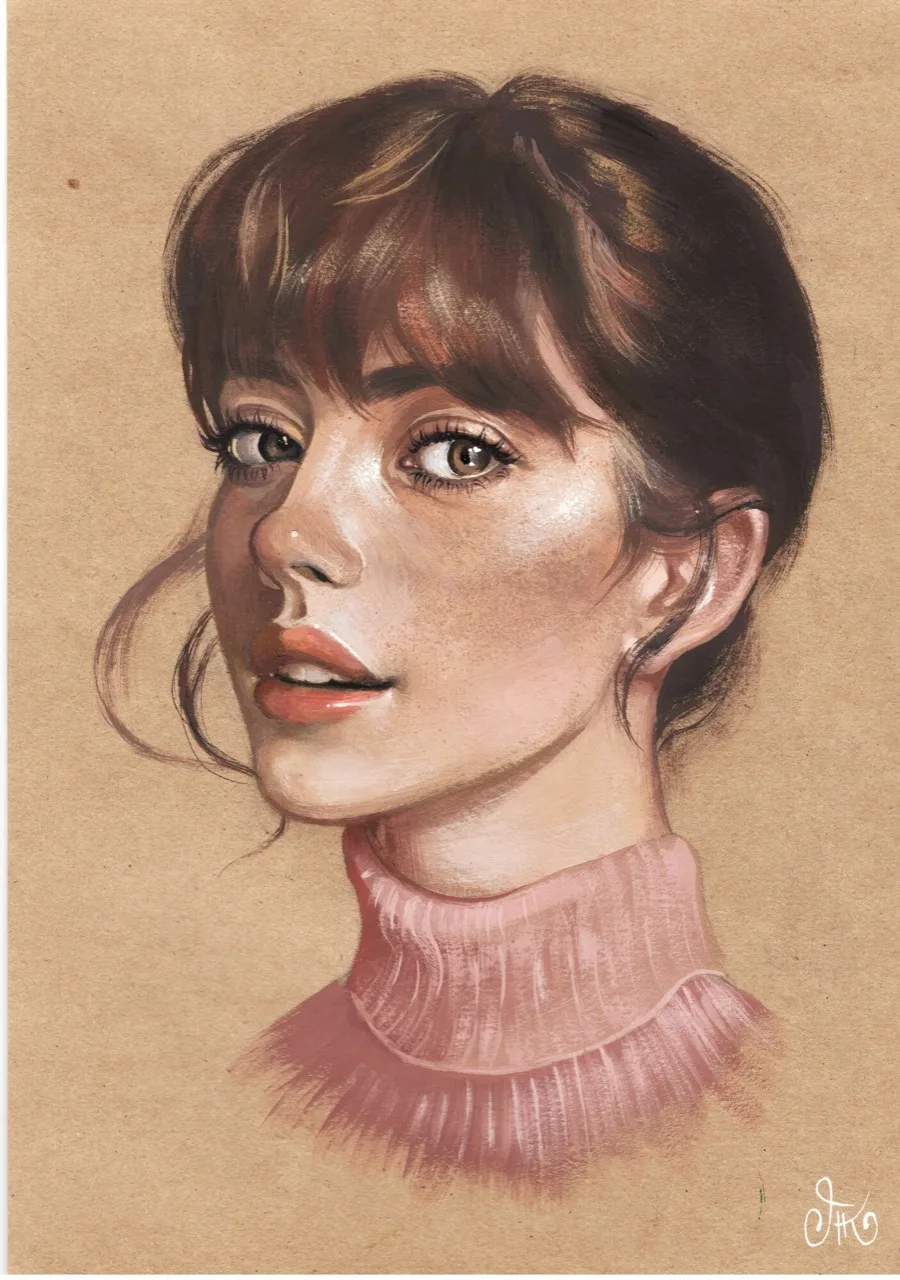
Chapter 02
Depression? Try Expression.
When creating becomes a way back to yourself.
The opposite of depression is not always joy. Sometimes, it’s expression.
When I feel lost, anxious, overwhelmed, or simply like life has become too much, I draw. I don’t wait until I feel better. I draw because I don’t feel better.
For me, painting has always been a very pleasant kind of escape — a way to step into another universe for a while and remember that there is more to life than whatever is happening right now.
And I think there is something especially dangerous about having to steal your own life in little fragments. Ten minutes to draw. Fifteen minutes to think. A stolen evening when everyone else has finally stopped needing something from you.
We are not meant to live like that.
There is something creative and childlike inside you that wants more than survival. It wants to play, explore, make things, be curious, and have access to the richness of life. And when you keep pushing that part of yourself aside, something slowly goes quiet.
So listen to it. Make space for the things that actually mean something to you. You don’t need permission to build a life where you can finally bloom instead of constantly squeezing yourself into whatever space is left.
And I believe in something else: you have to believe that things can work out before you can make them work out. I’ve never had the patience to sit around wondering whether I’m talented enough, whether it will work, whether people will like it. If there is something I want, I go and take it.
Maybe that sounds naive. I think it’s one of the most useful things an artist can have.
So create when you feel bad. Create when you feel stuck. Create when you don’t know what you’re doing. Don’t wait to feel okay before you return to yourself.
Beauty, imagination, curiosity —
these things are not useless luxuries.
They are part of what makes life feel worth inhabiting. They’ve saved me more than once. And maybe your creative life is asking you to come back, too.
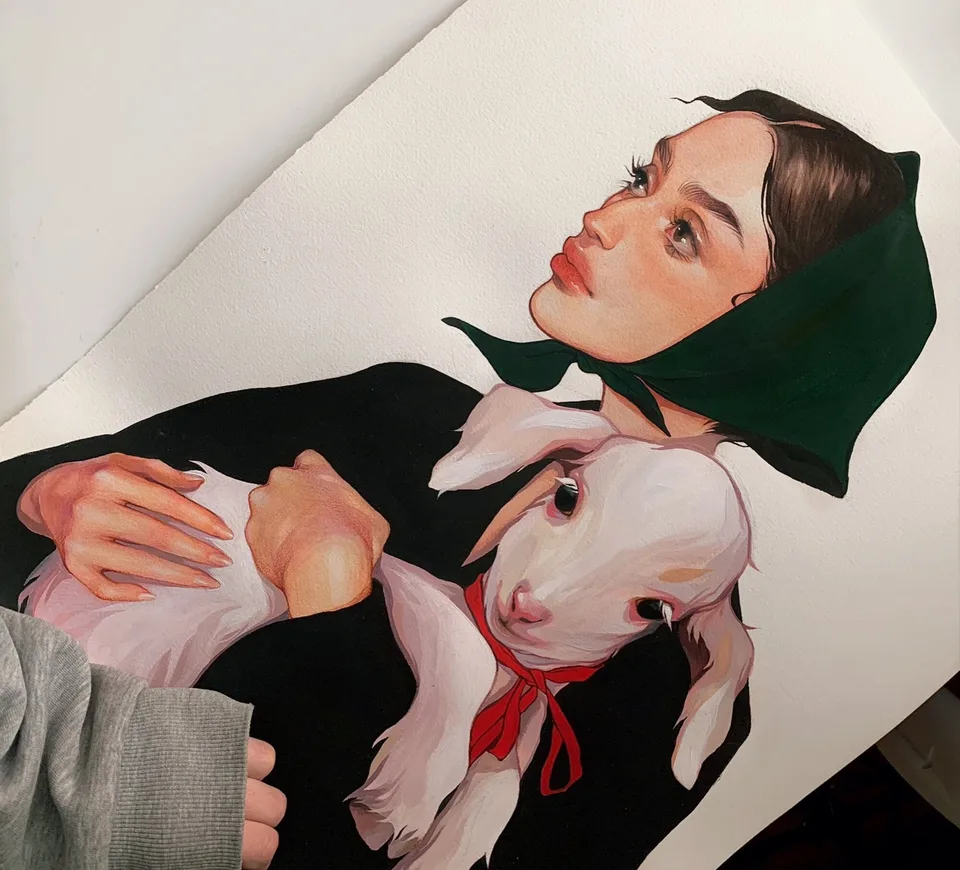
Chapter 03
Stay for the ugly middle
Learning to trust the process — in art and in life.
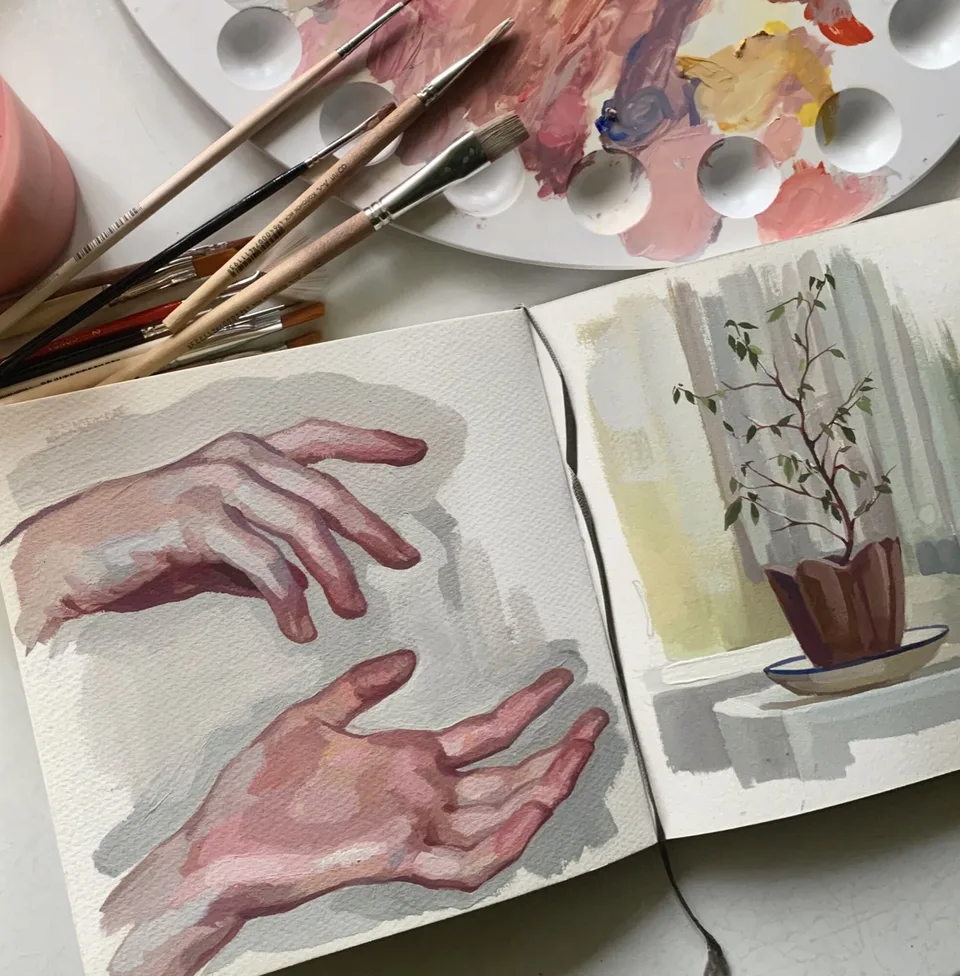
There is something funny about gouache: it looks beautiful at the beginning. Then, somewhere in the middle, it looks terrible.
Nothing fits together. The colors are wrong. The face looks strange. The painting has lost whatever made it promising in the first place.
And then you keep going.
One layer. Then another. A little shadow. A little light. A correction here, a detail there. And suddenly, a few hours later, you look at it and think: Oh. There it is.
You just had to stay long enough to see it.
I think life works in much the same way. Sometimes you are simply in the ugly middle. You can’t see the whole picture yet, so you assume you’ve made a mistake. You start questioning yourself. Maybe I’m not good enough. Maybe this isn’t working. Maybe I should stop.
Stay.
You need a little bit of that childlike audacity — the kind that asks life for what it wants without first preparing itself for rejection.
Ask for it. Try again. Knock on the door. Send the message. Make the painting. Apply for the thing. Move somewhere new. Start before you feel completely ready.
“Logic will get you from A to B. Imagination will take you everywhere.” — Albert Einstein
A person is not lifted by the absence of fear. They are lifted by having something they want badly enough to move toward despite it. I call it the “I have to try” mindset.
Not “I have to succeed.”
Not “I have to know exactly what I’m doing.”
Just: “I have to try.”
And there is another kind of trust I’ve had to learn: I can be happy even when everything is far from perfect.
Because the childish version of happiness says: When I make more money, I’ll be happy. When I figure out my relationship, I’ll be happy. When I finally become the person I want to be, then I’ll relax.
But growing up is realizing: I want all of those things. I’m going after them. But my life doesn’t have to be put on hold until I get there.
You can have enormous ambitions and still spend an entire day doing absolutely nothing. You can want more and still love what you already have. You can be serious about your future without making your present miserable.
Don’t postpone small joys. Later, either the heart dies or you do.
And letting go is not laziness. Sometimes it is radical trust. You don’t need to check the news ten times before noon. You don’t need to mentally rehearse every possible disaster. You don’t need to win the daily Olympics of “but what if…?”
Control is mostly an illusion anyway. Sometimes you have to put the brush down, stop trying to force the painting into existence, and trust that the next layer will reveal something you cannot see yet.
That is an art too. And like any art, it takes practice. Life is, to a surprising extent, as good as the way you learn to look at it.
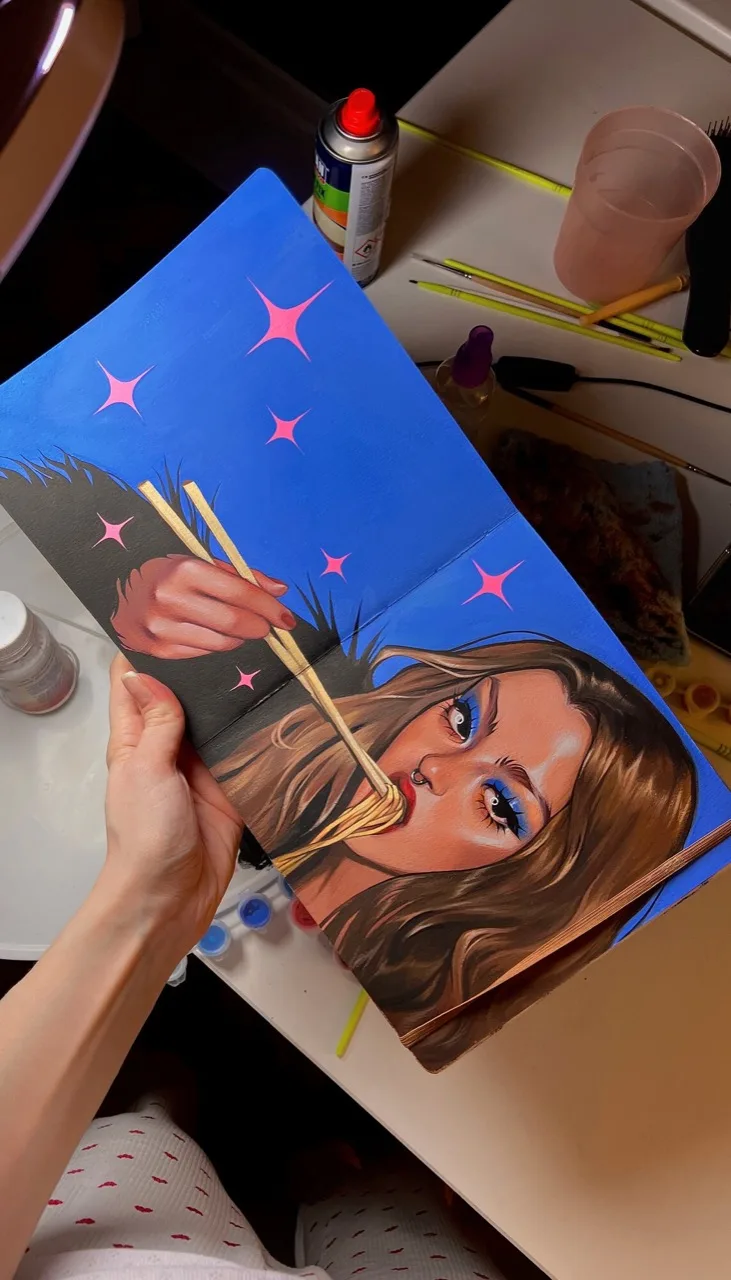
Chapter 04
Discipline is a decision
Consistency doesn’t begin with motivation. It begins with choosing.
When people say, “I’m just not disciplined,” I don’t always think the problem is laziness. Very often, it’s indecision.
You keep negotiating with yourself. Should I draw today? Maybe tomorrow. Maybe I need to rest. Maybe I should learn something first. Maybe I should wait until I have more time. And while you are deciding, your energy is leaking away.
There is a scene in Homer’s Odyssey that I think about often. Odysseus has to lead his ship through a narrow strait. On one side is Charybdis — a deadly whirlpool that could swallow the entire ship. On the other is Scylla — a monster who will inevitably kill six of his men.
There is no perfect third option. He has to choose. And that is one of the hardest things about being an adult: every real choice costs you something.
Sometimes we keep searching for the imaginary third door where everything works out perfectly. But life rarely offers that door.
The ease I talk about doesn’t come from having a perfect life. It comes from accepting reality and choosing the path that won’t destroy you. I call this existential honesty.
You decide: This is what I want. This is what I’m willing to give up for it. This is the direction I’m going. And then you stop arguing with yourself.
That is when discipline becomes much easier. Because once the decision is made, the energy you were spending on hesitation becomes available for action.
Because becoming an artist isn’t only about painting all day. It’s about thinking about art all day.
I use many other techniques to make creativity easier to maintain — and I’ll share them in much more depth inside my program. But start here: Make the decision. Then make it easy to act on it.
Atoms move. The Earth moves. The sun and the moon keep travelling without asking whether everything around them is perfectly aligned. You don’t have to stand still until your vision is perfectly clear.
From you comes the action. From the universe comes the blessing.
I want there to be fewer “I wish I had tried.” And many more:
“I still can’t believe I actually did it.”
Chapter 05
Your style is not something you find
It is what remains after you stop trying to be anyone else.
I think there is a very simple test for whether something has a real artistic identity: Would I recognize it if you removed the name? That is what makes a style.
A style is a way of seeing. And it usually starts with something much more personal than technique: obsession.
The things you keep coming back to without being told to. The colors you always choose. The shapes you notice everywhere. The kind of faces that fascinate you. The subjects you can draw ten times and still want to draw an eleventh.
Without obsession, there is very little identity. There is only the average.
So what makes a drawing yours?
There is a Japanese concept called kami — roughly, the spirit or essence of a thing. I like thinking about art this way. When you draw, ask yourself:
What do I want this picture to feel like?
Not “Is it beautiful?” Not “Will people like it?” Not “Does it look like what’s trending?” What do you want someone to feel when they see it?
Maybe your art feels sensual. Or unsettling. Or nostalgic. Or playful. Or quiet. Or cinematic. Or strange.
That feeling becomes part of your kami. Without it, you can become very good at reproducing other people’s results while never really saying anything of your own.
And this matters more than ever. AI can produce almost any technically impressive image in seconds now. So why should someone want your painting?
Because they are not buying pixels. They are buying your taste. Your decisions. Your sensitivity. Your way of combining things that nobody else would have combined in quite the same way.
AI can imitate an image. It cannot have lived your life. It cannot remember the strange thing you noticed as a child. It cannot know why one particular shade of blue makes you feel safe. It cannot carry your private associations, your obsessions, your memories, your contradictions.
That is your material.
Don’t try to be different.
Try to be specific.
Think about Batman. Batman is fictional, but the character is immediately recognizable. Why?
Because the image has been stripped down to a very clear set of qualities. Darkness. Discipline. Fear. Justice. Solitude. A particular silhouette. A particular atmosphere. It is not random. It is concentrated.
Your artistic identity works in a similar way. You are allowed to have a hundred interests. But when you keep noticing the same things and making the same kinds of choices across your work, something starts to emerge.
That is your visual language. And this is where artistic taste becomes so important.
Don’t just look at another artist and think, “I like this.” Ask: What exactly do I like? The composition? The way they simplify the face? The colors? The amount of empty space? The lighting? The emotional tension? The way something feels almost unfinished?
Train yourself to see why something affects you. Because eventually, your references stop being instructions. They become ingredients.
You take something from here, something from there, add something that exists only in your imagination — and eventually, you get somewhere that didn’t exist before. That is how you stop copying reality. You start interpreting it.
And one more thing. Your style is not necessarily going to feel new to you. In fact, it might feel strangely familiar. Because it is made from things that have been inside you all along.
The goal isn’t for this process to turn you into someone else. It is to reveal what was already there — and give you enough awareness and courage to actually use it.
So don’t ask, “How do I find my style?” Ask:
“What do I keep choosing when nobody is telling me what to choose?”
That is where we start.
Close the tabs. Open your sketchbook.
Less searching.
More making.
Five practical exercises for finding your unique artistic style.
In my course, we will spend a lot of time developing your unique artistic style. Not just finding a few “signature tricks” that make your work look different from everyone else’s.
We will go much deeper: learning to understand what you want to say through your art, which visual decisions feel natural to you, and what makes your work recognizable even without your name on it.
Your style doesn’t appear the moment you decide, “Okay, this is how I paint now.” It is built through hundreds of small decisions — what you choose, repeat, emphasize, experiment with, and eventually learn to let go of.
Here are a few exercises you can start with.
Your artwork
as a person
Imagine that your artwork is a person. Not the artist who created it — the artwork itself.
- What does it look like? How does it speak?
- Is it loud or quiet? Sharp or soft? Ironic or serious?
- Does it love order or chaos?
- Does it seek perfection or leave room for imperfection?
- What colors, materials, shapes and textures belong to it?
- What feeling does it leave behind?
Now translate these qualities into an artwork.
For example, if your painting is quiet, airy and slightly mysterious, perhaps it doesn’t need harsh outlines, loud colors or an abundance of details. You are translating an abstract feeling into a visual language.
Museum of
one artwork
Imagine that your artistic world has been invited to a museum. But the curator gives you one condition: you can exhibit only one painting. Not ten. Not a collection. One.
What artwork could tell someone about you without a single word? Create it.
If someone saw only this painting, what would they understand about me?
This exercise quickly reveals what actually matters to you — and what you may be adding simply because it is “beautiful” or because you have seen it done before.
Sometimes style begins with learning what deserves to stay.
Deconstruct
the cliché
Choose a subject you have seen a thousand times. Flowers. A female portrait. The ocean. A self-portrait. A still life. A city at night.
Now give yourself one restriction: you are not allowed to paint it in the usual way.
Don’t ask, “How is the ocean usually painted?”
Ask: “What does the ocean actually mean to me?”
Maybe it isn’t a wave. Maybe it is coldness. Rhythm. Reflected light. Emptiness. Movement. A memory. Anxiety. Freedom.
Try to paint the essence of the subject, rather than the subject itself. This is how you begin moving beyond literal representation and towards your own visual language.
Borrow —
then transform
Choose three artists whose work genuinely speaks to you. But don’t copy their paintings. Take only one principle from each:
- Composition
- Color
- Texture or simplification of form
Create one completely original artwork using these three principles together.
Then remove anything that feels too obviously connected to the artists you studied.
The goal is not to find one person you want to become. The goal is to collect influences from different places and transform them into something that belongs to you.
Build your
visual DNA
After completing the exercises, collect your observations into one list. Not “My style is beautiful female faces and pink.” Go deeper.
I am drawn to…
- Blurred edges
- Dramatic light
- Imperfect textures
- Muted colors
- Cinematic compositions
- Negative space
- Elongated figures
- Tension between softness and darkness
What do all these choices say about the way I see the world?
Because ultimately, your artistic style is not a collection of visual techniques. It is a way of seeing.
And this is why, on my course, we won’t simply “find your style.” We will develop your visual awareness, experiment extensively, analyze your work, and gradually build your own visual DNA.
Until one day you stop asking, “How can I make something original?” And start asking:
“How can I say this in a way that only I can?”
And that is a much more important question.
Chapter 06
Making feelings visible
From expression to your audience.
Art is not about perfection. In many ways, it is about radical honesty — giving form to emotions, stories and parts of human nature that are difficult, uncomfortable, or simply impossible to explain with words.
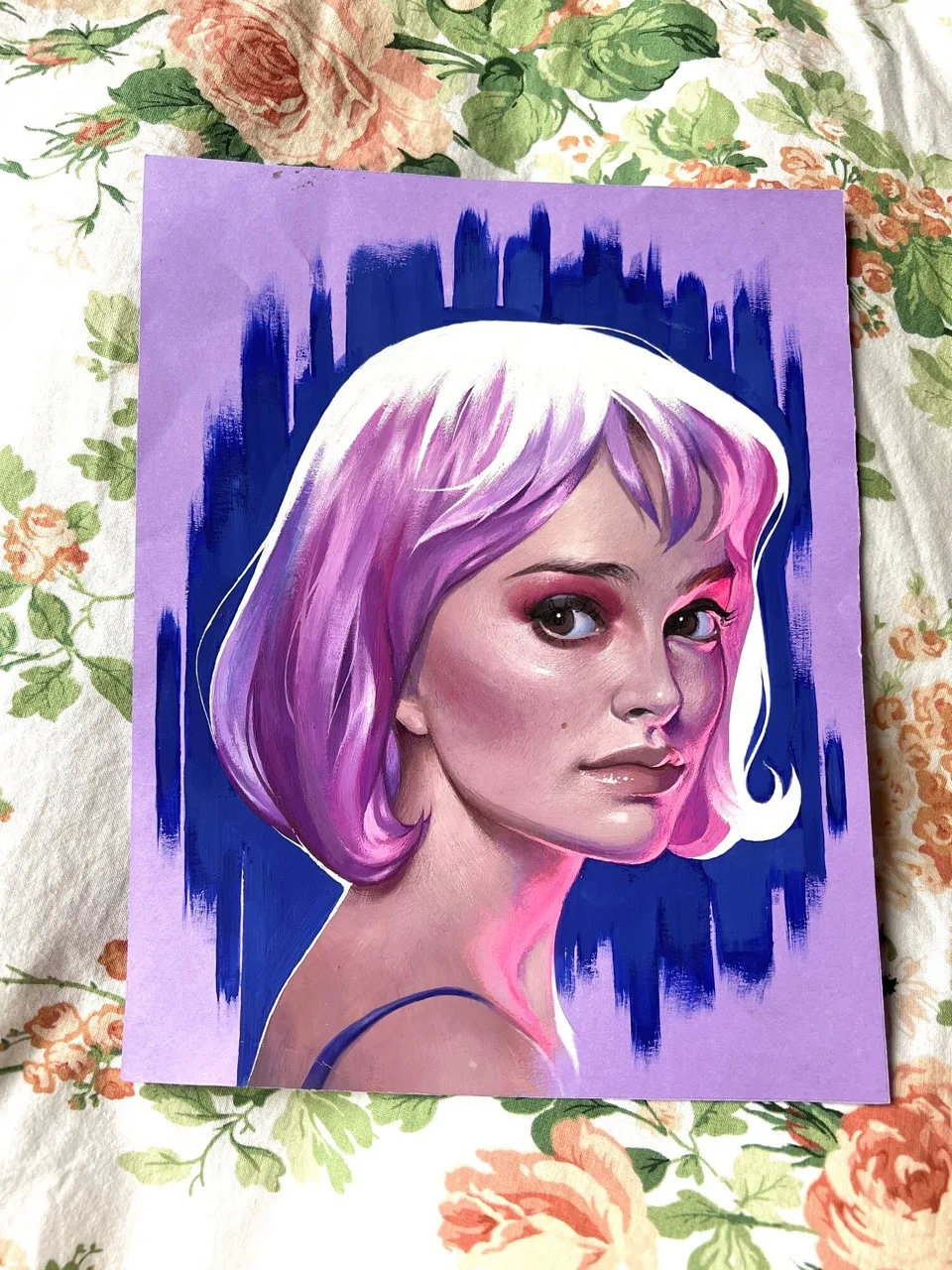
Your painting should do more than look beautiful. It should move someone from one emotional state to another. There should be something beneath the surface — a story, a tension, a feeling that the viewer can sense even if they cannot immediately explain it.
Imagine that you are standing on one side of a river, and your viewer is standing on the other. They want to reach you.
What needs to be hidden between the lines of your painting for them to cross the river?
That is where your message, your emotion and your audience meet. And this is something to think about before you even pick up your brush.
In my course, we will work on exactly this: finding the people who truly resonate with your visual language — your audience, buyers and fans. People who don’t simply like your paintings, but want to own them.
Because creating great art and having people actually buy it are two different skills — and you can learn both.
And I know that not everyone feels comfortable becoming a blogger or constantly showing up online. You don’t have to.
That is why I’ve also included a section in my course on how to find your audience and sell your art without building your life around social media. Yes — it is absolutely a real strategy.
Chapter 07
Creating your own artistic world
Beyond style — building a universe that feels unmistakably yours.
An artist’s mind is a place where imagination can move beyond earthly limits. It is where memories, emotions, dreams, observations and beauty come together — and where something completely unique can be born.
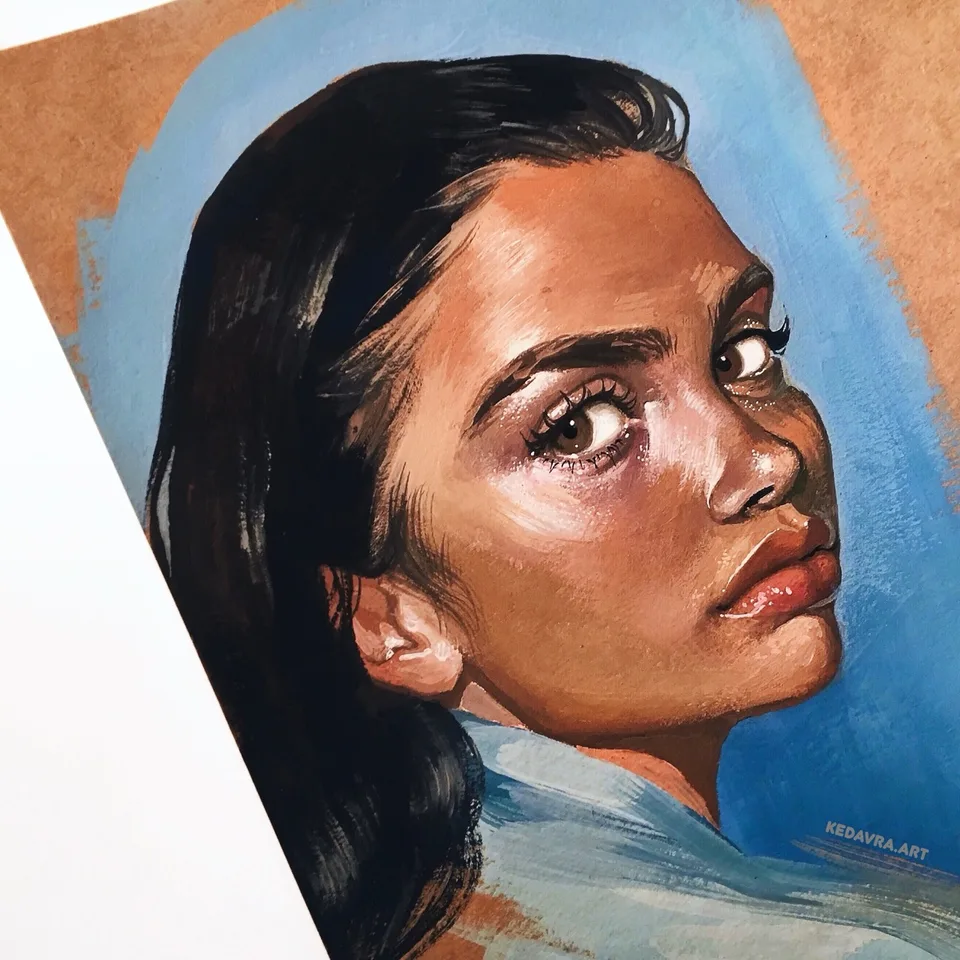
The most memorable paintings often come from exactly this place. Not from trying to paint like someone else, but from creating a world that could only exist through you.
Your own artistic world is, in a way, your personal version of reality. In the outside world, there is very little we can fully control. But when you paint, you decide what exists.
You decide what surrounds you. What colors fill the room. What music is playing. What characters live there. What happens — and what doesn’t. And perhaps most importantly, you decide what you are allowed to think and feel there.
Painting is an exercise in letting yourself go.
And the more freely you learn to exist inside your own artistic world, the easier it becomes to recognize yourself outside of it too — to understand what belongs to you and what doesn’t, what you genuinely want and what you have simply learned to accept.
You don’t need to become more like everyone else. Look at nature. You will never find two completely identical leaves in an entire forest.
Difference is not a flaw in the system.
Difference is the system.
And yet so many artists spend years trying to become “good enough” at reproducing what already exists.
Imagine an artist who can technically paint almost anything. She can copy another artist’s work beautifully. She can reproduce someone else’s brushwork, colors and visual language almost perfectly.
But then you take away the reference. And suddenly she has no idea what to paint.
If this sounds familiar, there is nothing to be ashamed of. It simply means that you may have spent more time developing your ability to follow a visual language than developing your own.
And this can also explain something else: why you start paintings and abandon them halfway. Not because you’re lazy or lack discipline. But because every new attempt begins to feel like another version of someone else’s work.
And if it doesn’t feel like you’re moving toward your own world, there is very little emotional reason to keep going. This is why consistency doesn’t always come from more willpower. Consistency becomes much easier when you have somewhere that feels worth returning to.
Your artistic world becomes a place to return to.
Once you begin building your own universe — not simply a “style” made of recognizable tricks, but a world with its own atmosphere, values, symbols, colors, characters and emotional language — something changes.
Painting becomes much harder to abandon. Because it becomes yours. It becomes the place you return to when everything outside of it feels uncertain.
And eventually, you may stop painting primarily for approval. You stop asking: Will people like this? Will this perform well? Is this trendy? Will someone buy it? And begin asking:
“Is this true to my world?”
That is a completely different creative position. Your audience can enter your world. Your collectors can take a piece of it home. But you are the one who creates the world first.